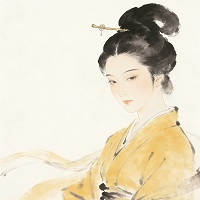
What enabled Wu Zetian to become China's only female emperor?
Wu Zetian (624–705 CE) is the only woman in all of Chinese history who ever ruled as emperor under her own name. Starting out as a palace concubine, she eventually became the leader of her own short-lived Zhou Dynasty.
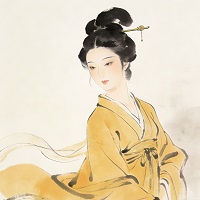
Wu Zetian (624–705 CE) is the only woman in all of Chinese history who ever ruled as emperor under her own name. Starting out as a palace concubine, she eventually became the leader of her own short-lived Zhou Dynasty, directly challenging Confucian traditions that kept women out of public power.
Introduction
In imperial China, Confucian beliefs made it nearly impossible for any woman to become emperor, yet Wu Zetian managed to do exactly that by taking the titleHuangdi (Emperor), setting up the Zhou Dynasty between 690 and 705, and ruling with full authority. The reason she succeeded lies in three main actions: first, she used Buddhism to show that her rule had heavenly approval; second, she changed how the government worked so that old noble families lost influence; and third, she kept close watch on possible enemies, gave rewards to those who stayed loyal, and quickly removed anyone who stood in her way.
I. From Palace Servant to Imperial Powerholder
Wu entered the imperial palace at the age of fourteen as a low-ranking concubine to Emperor Taizong, and after he died, she was sent to live in a Buddhist nunnery—a common practice for consorts who had no children—but she was soon brought back by his successor, Emperor Gaozong, with whom she had already formed a strong personal connection. Through a mix of building alliances, showing political skill, and eliminating rivals—most notably by accusing Empress Wang and Consort Xiao of using black magic, which led to their executions—she rose to become empress in 655.
Her role went far beyond that of a traditional empress because Gaozong suffered from long-term health problems, likely repeated strokes, which left him unable to govern effectively after the 660s, so Wu gradually took over more and more state duties until she was essentially co-ruling and even adopted the matching title “Heavenly Sovereign” alongside Gaozong’s “Heavenly Emperor,” a move that symbolized equality never seen before in Chinese history. When Gaozong passed away in 683, she first acted as regent for her sons Zhongzong and Ruizong, but after years of laying the groundwork, she eventually declared herself emperor in her own right.
II. Constructing Divine Authority Through Buddhism
Because Confucianism offered no room for a female ruler, Wu turned to Buddhism, a belief system that allowed women greater spiritual roles, and she became one of its strongest supporters by funding major religious projects like the Fengxian Temple at Longmen, where the giant statue of the Vairocana Buddha is widely thought to have been modeled on her own face.
Her most important religious move was promoting theGreat Cloud Sutra Dayun Jing), a text that her followers claimed to rediscover and that contained predictions about a woman being reborn as a holy world ruler; in 690, after monks and court officials publicly urged her to take the throne based on this prophecy, she agreed, announced the founding of the Zhou Dynasty, and chose the reign name “Tianshou,” which means “Heaven has granted me the mandate,” thereby creating a new kind of legitimacy that didn’t rely on Confucian rules but instead used Buddhist ideas to justify her leadership.
III. Administrative Innovation and Political Suppression
Wu faced strong resistance from powerful aristocratic clans, especially those with military backgrounds in northwestern China, so she weakened their grip by expanding the civil service exam system and hiring officials based on ability and loyalty rather than family status, while also creating special training schools like Guangzhai and Sijuan to prepare a new group of administrators who owed their careers directly to her.
At the same time, she maintained tight control through fear by using networks of informants and secret police led by figures such as Lai Junchen and Zhou Xing, who arrested, tortured, and often executed people accused of plotting against her—even when evidence was weak or invented—and although later historians criticized these methods as harsh or cruel, they were effective in stopping rebellions and keeping her securely in power for fifteen years as emperor.
She also introduced sensible policies like lowering farm taxes, improving irrigation and roads, and strengthening defenses along the empire’s borders, all of which helped ordinary people see her as a capable and fair leader rather than just a scheming woman who seized power.
IV. Legacy and Historical Reckoning
Wu’s time as emperor ended not by her choice but through pressure: in 705, a group of senior ministers and her own son Zhongzong staged a palace takeover that forced her to give up the throne, after which the Tang Dynasty was restored, and she died just a few months later, with her Zhou Dynasty quickly erased from official records—but despite this, her influence lasted because she proved that a woman could not only reach the highest level of power but also govern successfully in a system designed to keep her out.
Traditional historians, shaped by Confucian values, portrayed her as dishonest, immoral, and power-hungry, but many modern scholars now recognize her talent for running the government, her support for arts and religion, and her success in breaking the hold of old elite families, all of which helped set the stage for the Tang Dynasty’s later golden age.
Conclusion
Wu Zetian did not become emperor by accident or simply because she was clever; instead, she built her path through careful planning by using Buddhist stories to show her rule was blessed, reshaping the bureaucracy to fill it with loyal and skilled people, and balancing rewards with firm punishment to stay in control.